'/%3E%3Cpath fill='%23ffffff' transform='translate(256 256) scale(0.6) translate(-256 -256)' d='M501.1 395.7L384 278.6c-23.1-23.1-57.6-27.6-85.4-13.9L192 158.1V96L64 0 0 64l96 128h62.1l106.6 106.6c-13.6 27.8-9.2 62.3 13.9 85.4l117.1 117.1c14.6 14.6 38.2 14.6 52.7 0l52.7-52.7c14.5-14.6 14.5-38.2 0-52.7zM331.7 225c28.3 0 54.9 11 74.9 31l19.4 19.4c15.8-6.9 30.8-16.5 43.8-29.5 37.1-37.1 49.7-89.3 37.9-136.7-2.2-9-13.5-12.1-20.1-5.5l-74.4 74.4-67.9-11.3L334 98.9l74.4-74.4c6.6-6.6 3.4-17.9-5.7-20.2-47.4-11.7-99.6.9-136.6 37.9-28.5 28.5-41.9 66.1-41.2 103.6l82.1 82.1c8.1-1.9 16.5-2.9 24.7-2.9zm-103.9 82l-56.7-56.7L18.7 402.8c-25 25-25 65.5 0 90.5s65.5 25 90.5 0l123.6-123.6c-7.6-19.9-9.9-41.6-5-62.7zM64 472c-13.2 0-24-10.8-24-24 0-13.3 10.7-24 24-24s24 10.7 24 24c0 13.2-10.7 24-24 24z'/%3E%3C/svg%3E)
llms.txt Specification: Complete Guide to Optimizing Websites for AI Crawlers & LLMs
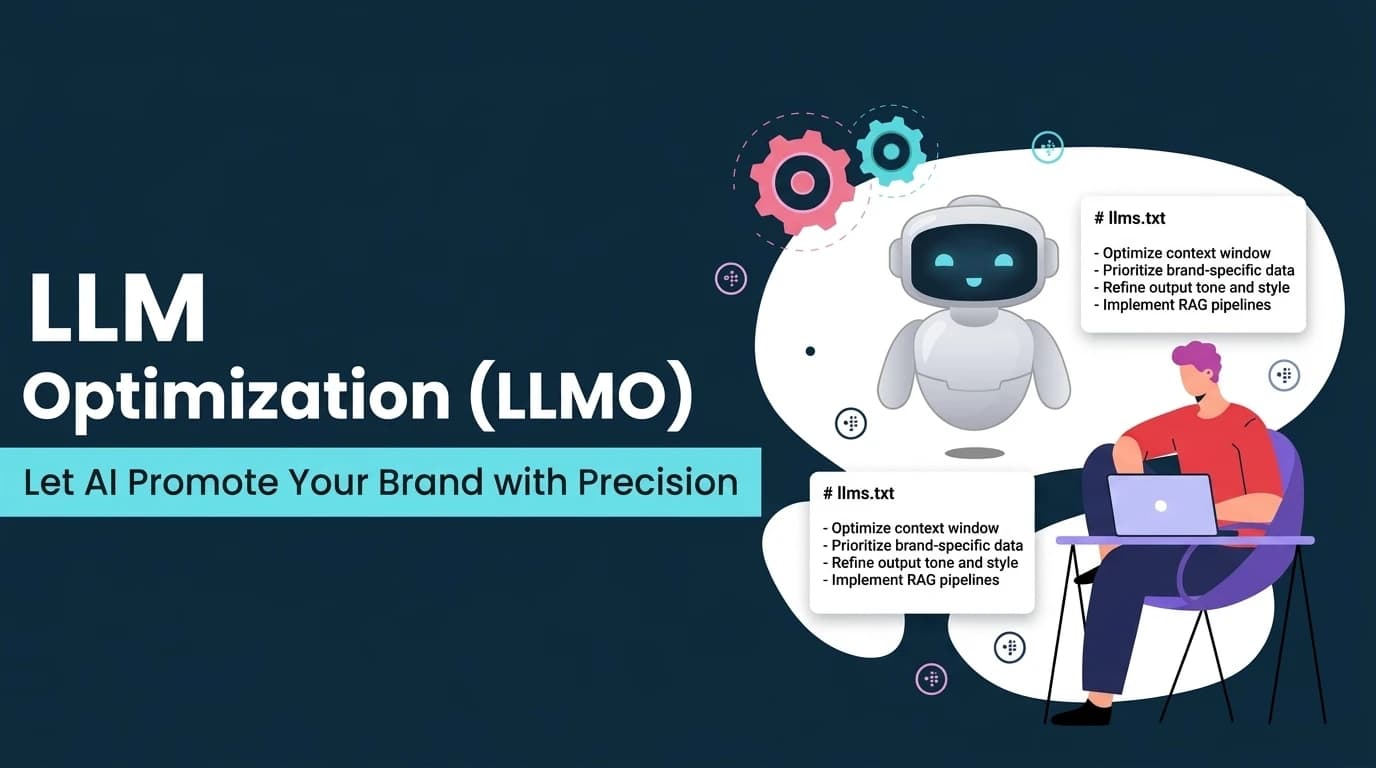
The llms.txt specification is an open, standardized Markdown protocol served at the root directory (/llms.txt) designed to give Large Language Models (LLMs) and autonomous AI retrieval agents a curated, low-latency roadmap of a website's authoritative content. By stripping away heavy HTML document object models, tracking pixels, and client-side JavaScript execution, it eliminates token waste and prevents hallucinated citations in AI answer engines.
Executive Summary: The Paradigm Shift to Agentic Retrieval
For over twenty-five years, web architecture evolved around a singular premise: search engines consume HTML documents through high-throughput headless browser rendering pipelines. Googlebot crawls, builds a Document Object Model (DOM), schedules JavaScript execution, parses CSS styling cascades, and evaluates page rank algorithms.
The rapid ascent of Answer Engine Optimization (AEO), Generative Engine Optimization (GEO), and autonomous coding assistants (such as Cursor, Windsurf, Claude Code, ChatGPT Search, and Perplexity) has broken this fundamental assumption. An AI model does not care about layout shifts, CSS gradients, or client-side hydration scripts. It cares about pristine text tokens, semantic clarity, and ground truth data that can be loaded into an inference context window within milliseconds.
The llms.txt protocol solves the fundamental bottleneck between human-centric web applications and token-constrained neural networks.
1. What is the llms.txt Standard?
Proposed as a lightweight community specification and rapidly adopted by tech innovators including Vercel, Anthropic, Stripe, FastHTML, and LangChain, llms.txt provides a human-readable yet strictly parseable Markdown directory.
Core Functional Objectives of the Standard
- •Token Conservation: Eliminates navigation bars, footers, ad slots, and tracking bundles, reducing context consumption by 70–90%.
- •Zero-Hydration Ingestion: AI web agents can fetch static markdown via standard HTTP GET without executing V8 JavaScript virtual machines.
- •Authoritative Knowledge Boundaries: Prevents models from indexing orphaned changelogs, staging subdomains, or conflicting legacy APIs.
2. Token Economics: HTML DOM Bloat vs. Clean Markdown
Why can't an AI model simply scrape an existing HTML page? The answer lies in the mathematical economics of Large Language Model inference.
| Metrics & Attributes | Standard HTML / React App | llms.txt / Markdown Endpoint |
|---|---|---|
| Average Payload Size | 180 KB – 1.4 MB (DOM + inline JS) | 8 KB – 45 KB (Pristine text) |
| Token Footprint | 14,000 – 35,000 tokens per page | 900 – 2,200 tokens per page |
| Agent Processing Latency | 2.8 – 5.4 seconds (Headless parse) | 80 – 220 milliseconds |
| Hallucination Vulnerability | High (Parses cookie banners & nav links as content) | Near Zero (Explicit structural hierarchy) |
When an autonomous coding assistant has a limited context window (e.g., 128k or 200k tokens), feeding it standard web HTML forces the agent to exhaust its working memory on boilerplate rather than problem-solving. Clean Markdown endpoints linked from llms.txt bypass this penalty entirely.
3. The Modern Web Triad: robots.txt vs. sitemap.xml vs. llms.txt
A common misconception is that llms.txt replaces existing protocols. In reality, modern search architecture relies on a specialized three-tier hierarchy:
robots.txt
Specifies crawler boundaries, rate-limiting directives, and Disallow paths for bot user-agents. Tells bots where they are forbidden to crawl.
sitemap.xml
Provides deterministic URL inventories, last-modified dates, and change frequencies for traditional search indexers (Googlebot, Bingbot).
llms.txt
Delivers structured semantic summaries and direct markdown documentation endpoints tailored for LLMs and autonomous agents.
4. Strict Syntax & Structural Layout Rules
To guarantee compatibility with automated parsers, the llms.txt file must conform to deterministic layout standards:
# Project or Platform Name

> A concise 1-2 sentence executive description summarizing the core platform, its architecture, and intended use cases for LLM agents.

## Core Documentation
- [Quickstart Guide](https://example.com/docs/quickstart.md): Step-by-step onboarding protocol in under 5 minutes.
- [API Reference](https://example.com/docs/api.md): Complete REST and GraphQL endpoint schemas with status code descriptions.
- [Authentication](https://example.com/docs/auth.md): Bearer token exchange, OAuth2 workflows, and rate limits.

## Key Architecture & Specifications
- [Data Models](https://example.com/docs/models.md): JSON schema definitions and database relational structures.
- [Error Codes](https://example.com/docs/errors.md): Standardized troubleshooting index for production exceptions.

## Optional Reference
- [Full Knowledge Base](https://example.com/llms-full.txt): Complete concatenated documentation package for bulk context ingestion.
Key Rules to Avoid Ingestion Rejection:
- Exactly One H1: The file must start with a single
# Titleheader indicating the entity name. - Blockquote Summary: Immediately below the H1, a blockquote (
>) provides a concise context anchor. - H2 Groupings: Use
## Sectionheadings to logically cluster related documentation. - Hyphenated Links with Colon Description: Links should strictly follow
- [Title](URL): Contextual explanation.
Generate a Validated llms.txt File in Seconds
Use BrivTools Client-Side LLMs.txt Generator to convert your existing documentation links into a strictly compliant, token-optimized llms.txt standard file with zero server uploads.
5. The Companion Protocol: Architecture of llms-full.txt
While llms.txt acts as a table of contents or curated directory, the companion file llms-full.txt consolidates the actual content of all linked markdown files into a single, comprehensive text document.
This enables advanced autonomous agents to download your entire knowledge base in a single HTTP round-trip without issuing dozens of recursive network requests, drastically reducing ingestion latency for complex developer queries.
6. How Major AI Crawlers (GPTBot, ClaudeBot, Perplexity) Consume Files
Autonomous AI bots probe website roots using specific discovery heuristics:
- 1. GPTBot (OpenAI) & ChatGPT Search:Reads
robots.txtfirst. If permitted, queries/llms.txtto identify preferred ground-truth pages before running deep RAG embeddings. - 2. ClaudeBot & Anthropic Agent Tools:Prioritizes raw markdown over rendered DOMs. Injects
llms.txtdirectly into system context for multi-turn reasoning workflows. - 3. PerplexityBot & Generative Answer Engines:Uses explicit link descriptions inside
llms.txtto generate exact citation footnotes and avoid indexing low-relevance navigational chrome.
7. Step-by-Step Implementation & Deployment Protocol
Audit Your Core Documentation Assets
Identify your top 10–20 high-value educational guides, API specifications, and service definitions. Exclude legal boilerplate, user account pages, or marketing splash pages.
Generate Clean Markdown Endpoints
Ensure target URLs link to clean markdown files or static endpoints that strip navigation and return Content-Type: text/markdown.
Construct Your File with BrivTools
Navigate to the BrivTools LLMs.txt Generator, input your entity metadata, and export a syntax-checked file.
Deploy to Domain Root & Validate
Place the exported file into your framework's static root (e.g., /public/llms.txt in Next.js) and verify HTTP 200 delivery in your browser or via curl:
curl -I https://yourdomain.com/llms.txt
8. Frequently Asked Technical Questions
Does having an llms.txt file guarantee ranking in ChatGPT Search or Perplexity?+
Similar to how an XML sitemap does not guarantee Google page #1 ranking, llms.txt provides deterministic indexing instructions. AI systems like Claude, ChatGPT Search, and Perplexity prioritize clean markdown with unambiguous source citations, giving sites with validated llms.txt files a demonstrable competitive advantage in passage retrieval.
How does llms.txt differ from robots.txt?+
Traditional search crawlers read robots.txt to adhere to Disallow rules. An AI agent encountering an llms.txt file reads structured summaries, key documentation endpoints, and context-optimized markdown URLs designed specifically to fit into context window token budgets.
Where should the llms.txt file be hosted on the server?+
Serving it via redirects, nested paths (e.g. /docs/llms.txt), or behind authentication headers breaks autonomous agent discovery. Ensure your web server or Next.js static asset directory serves it with UTF-8 encoding.
Can small businesses or e-commerce stores benefit from llms.txt?+
When users ask Perplexity or ChatGPT 'What is the return policy for Store X?' or 'Compare Feature Y', sites with structured llms.txt files prevent models from scraping outdated forum threads or hallucinating legacy pricing.
Strategic Conclusion: Future-Proofing for AI Answer Engines
As AI search queries replace traditional ten-blue-link Google SERPs, websites that make their data frictionless for neural models will dominate citations and autonomous conversions. Adopting the llms.txt standard today establishes authoritative, hallucination-free visibility across the next generation of generative search engines.